
The finest Chromebooks are no longer simply computers that can run a few of Google applications. Chromebooks may now be used to meet a broad range of computing requirements, and a decent Chrome OS laptop or two-in-one computer can be more helpful than a poor Windows or macOS laptop in certain cases. Since a result, the Acer Chromebook Spin 713 is our choice for the best Chromebook of 2021, as it does almost everything well.
The finest Chromebooks are well-known for providing excellent value. To the surprise of no one, the word that many people desire excellent Chromebooks rather than simply inexpensive ones has reached the ears of Chromebook makers. Many are in the $500 to $600 range, but there are some excellent choices in the upper and lower price ranges, too. The additional money will go a long way toward ensuring that you receive something you'll be pleased with.
First and foremost, the finest Chromebooks in this price range have consistently produced high-quality results. There are so many parallels between the products from Asus, Lenovo, Google, HP, Dell, and Samsung that a conspiracy theorist could conclude that they are all sourced from the same manufacturer, which would be absurd. That's excellent news if you're doing comparison shopping since the vast majority of the items on this list would be terrific buys if you could get your hands on them at a discount. They are even capable of competing with some of the finest laptops, best budget laptops, and best student laptops currently available on the market.
In terms of the best Chromebook, we recommend the Acer Chromebook Spin 713, while in terms of the best Chromebook on a budget, we recommend the Lenovo Chromebook Duet. Some of our other top choices for the best Chromebooks of 2021 are the Google Pixelbook Go, the Google Pixelbook, the HP Chromebook x360, the Samsung Galaxy Chromebook 2, and the Samsung Galaxy Tab S2.
A decent keyboard, a strong build quality, a long battery life, a beautiful screen, and enough power to accomplish the tasks you want are likely to be the same qualities that most purchasers seek in a laptop in general. There are more Chromebooks than ever before that can fulfill those requirements, but these are the ones that stand out from the crowd.
1. ACER CHROMEBOOK SPIN 713:
 |
| Image Credits: Acer |
The Acer Chromebook Spin 713 is, without a doubt, the finest Chromebook you can purchase right now. The beautiful 3:2 screen, which matches some of the more costly competitors, provides a significant amount of more vertical room for your work and multitasking.
In addition to having a pleasant and quiet feel, the keyboard also has a pleasing illumination effect. An HDMI connector is included, which is uncommon on a slim Chromebook of this size and configuration. And, perhaps most significantly, the 11th-Gen Intel CPUs are capable of handling a large number of tabs with ease. The Spin's speakers aren't particularly impressive, and there is no biometric login option, but both are acceptable trade-offs for a laptop of this caliber and at this low price.
Against a backdrop where the primary distinctions between Chromebooks in this price range are mostly based on their displays and, in some cases, the inclusion of a pen, Acer distinguishes itself by manufacturing a cheap laptop that is exceptional in virtually every aspect.
2. LENOVO CHROMEBOOK DUET:
 |
| Image Credits: Lenevo |
Those searching for an inexpensive laptop for work on the move will find the Lenovo Chromebook Duet to be a great choice because of its low price and high value. It's a 10.1-inch 2-in-1 tablet with a detachable keyboard and kickstand cover that's both ultra-portable and powerful.
When it comes to performance, the Duet has a MediaTek Helio P60T CPU, 4GB of RAM, and up to 128GB of storage, and it works fine if you're simply surfing and don't intend on using it for anything that requires a lot of power. A version of Chrome OS tailored specifically for its convertible form factor, including the first version of Chrome that is designed for tablet usage, is also used by the device. As soon as the Duet is unplugged from its keyboard, it activates an Android-style gesture navigation mechanism that makes moving between applications a snap. However, the battery life is the most remarkable aspect; I was able to get close to 11.5 hours of usage under moderate conditions.
There are, of course, certain disadvantages. In addition to the tiny touchpad and keyboard (and just one USB-C connection), the 16:10 screen is a little dull. However, they are acceptable trade-offs to make in exchange for such a low price point. It's a fantastic secondary device for homework or surfing on the move while on the road.
3. HP CHROMEBOOK X360:
If you're searching for a laptop with greater power and don't mind upgrading to a little bigger screen size, the HP Chromebook x360 14 is an excellent option. HP offers a variety of configurations that come under this category, but we recommend the model we tested, which includes 8GB of RAM and 64GB of storage to go along with the i3 CPU and is the most affordable.
We chose the Asus over the HP due to its beautiful appearance, although on the slightly bigger HP, there isn't much to be disappointed in. It has the same number of ports, RAM, and storage as the original. The keyboard is excellent, and the sound is somewhat improved as a result of the speakers being located higher on the keyboard deck rather than at the bottom.
4.ASUS CHROMEBOOK CM3:
| Image Credits: Asus |
It is Asus' effort to compete with Lenovo's highly acclaimed Chromebook Duet, which is detachable from the rest of the laptop. The CM3 is a 10.5-inch Chrome OS tablet featuring a 16:10 aspect ratio and a fabric cover, as well as a kickstand and a keyboard that can be popped on and off. This model is somewhat more costly than the Duet, but it also has a few more functions.
One unusual feature is that the kickstand can be folded in two different ways: you can fold it in half the long way to stand the tablet up like a laptop, or you can fold it in half the short way to stand the tablet upright horizontally. We're not sure how useful this feature is in practice, but it is available in case you have a specific use case in mind.
There's also an integrated USI pen, as well as spacious keys with a surprising amount of travel. The battery life, on the other hand, was very impressive: we were able to operate on the gadget for an average of almost 13 hours straight.
The CM3 will not be the ideal Chromebook for everyone for the following reasons: It only has two connections (one USB-C and one audio jack), and its MediaTek CPU seemed a little slow when compared to more costly options on the market. However, if you're in the market for a convertible Chrome OS tablet and discover that the Duet doesn't quite meet your requirements, you're most likely in the CM3's target demographic.
5.SAMSUNG GALAXY CHROMEBOOK 2:
 |
| Image Credits: Samsung |
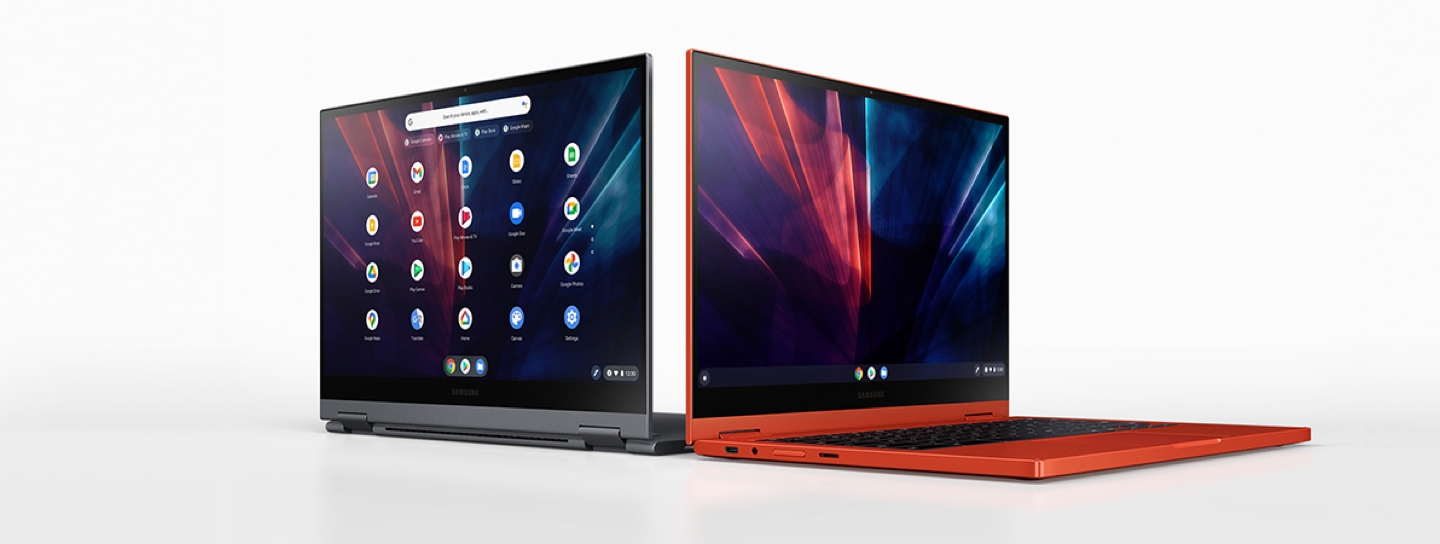
With a $1,000 price tag, an OLED display, a pen included, and a luxury construction, Samsung's first Galaxy Chromebook was designed to take you to the moon. The Galaxy Chromebook 2 isn't so much a follow-up to the original as it is a more inexpensive and simplified version of that device. No fingerprint sensor, no pen, and no OLED are included, but it is very functional, and with a starting price of less than $600, it is a lot more affordable to buy.
The Chromebook 2's most distinguishing characteristic is its outside finish: It is available in a vibrant “fiesta red” color that will make it stand out wherever you place it in your home or office. (There's also a gray option if you'd like something a little more modest.) It's also the first Chromebook to have one of Samsung's QLED displays, making it a first in the industry. QLED isn't the same as OLED — it's simply a better LED — but it's still one of the most beautiful displays I've ever seen on a Chromebook, if not the most beautiful.
Beautiful displays may have a negative impact on battery life, but that is not the case here. I was able to work on the Chromebook 2 for an average of about seven hours and twenty-one minutes each day, which means you shouldn't have to plug it in all that frequently. The Core i3 CPU, although not the most powerful chip you can buy in a Chromebook, is more than enough for the majority of business applications.
6. GOOGLE PIXELBOOK:
 |
| Image Credits: Google |
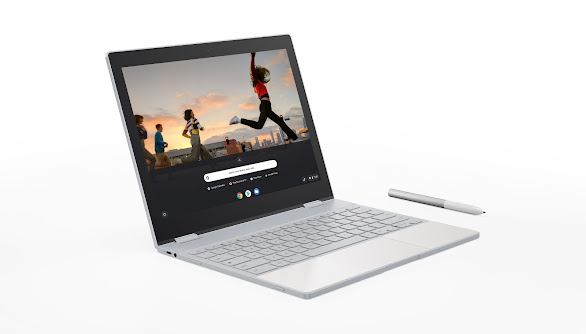
The Google Pixelbook Go is a no-frills 13.3-inch laptop that weighs just 2.3 pounds and is attractive to look at. With a durable magnesium chassis and a ridged grip on the bottom, it is less likely to slide when used on slanting surfaces.
Apart from being compact and attractive, the Pixelbook Go also offers excellent performance and enables rapid charging through either of its two USB-C connections. Aside from that, the battery life is excellent. In our tests, the Go lasted for more than eight hours, so you should have no trouble getting through a full workday with it. The keyboard, on the other hand, is a notable feature. It is silent, has excellent travel, and has a springy feel to it. Dieter Bohn, the editor of The Verge, said it to be his "favorite thing to write on by a long way."
As far as Chromebooks are concerned, the Go is an expensive device, and it does not come in first place on our list since the Chromebook Flip C434 provides comparable specifications and features at a little cheaper price. However, we believe that many consumers who place high importance on extended battery life and a lightweight design would choose to spend a little more money on this gadget.
7.LENOVO C13 YOGA:
 |
| Image Credits: Lenevo |
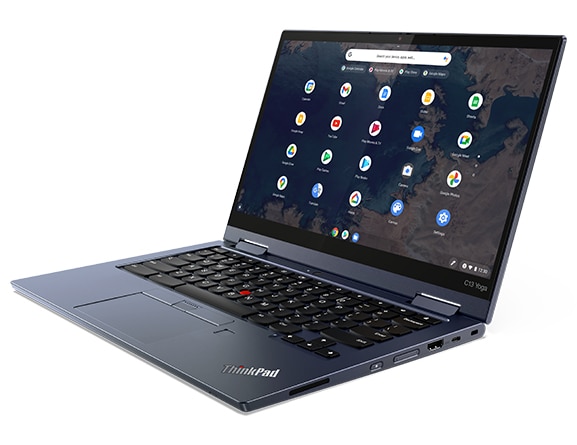
Many contemporary Chromebooks are geared at children and students, but this particular model is not. The C13 Yoga Chromebook is a high-quality, high-priced convertible Chromebook designed for adults. It's a member of Lenovo's prestigious ThinkPad business series, and it comes with all of the ThinkPad bells and whistles, including a red Trackpoint, separate touchpad clickers, a fingerprint sensor, a webcam shutter, and an aluminum design. If you put this Chromebook next to any number of Windows ThinkPads, we may not be able to tell which one it is at first glance.
A second distinction of the C13 is that it is the first Chromebook to feature AMD's Ryzen 3000 Mobile C-series CPUs, which are designed especially for Chromebooks and are marketed as such. The chips are capable of running a wide range of applications, including mobile games, with relative ease. We did wish the battery life was a little longer since we only got an average of a little more than six hours on a single charge. We got an average of seven and a half hours with our top choice, the Chromebook Spin 713, and several of the devices on our list easily go over eight hours without a hitch.
8. DELL INSPIRON 14:
 |
| Image Credits: Dell |
The Inspiron 14 is a robust convertible laptop with a brushed aluminum body that gives it a premium appearance despite the fact that it weighs 3.99 pounds. With a large backlit keyboard and a beautiful 1920 x 1080 display with realistic colors, this laptop is a great choice. Thanks to its Intel Core i3 CPU, 4GB of RAM, and 128GB of storage, it provides responsive performance for streaming, surfing the web while simultaneously working on other activities, and even more demanding creative projects.
For those of you who are artists, the Inspiron 14 comes with a stylus that is housed in a special socket within the chassis, so you won't have to worry about losing it. It does not need to use batteries or any other kind of charging because of electromagnetic resonance technology (EMR).
9.LENOVO FLEX 3 CHROMEBOOK:
 |
| Image Credits: Lenevo |
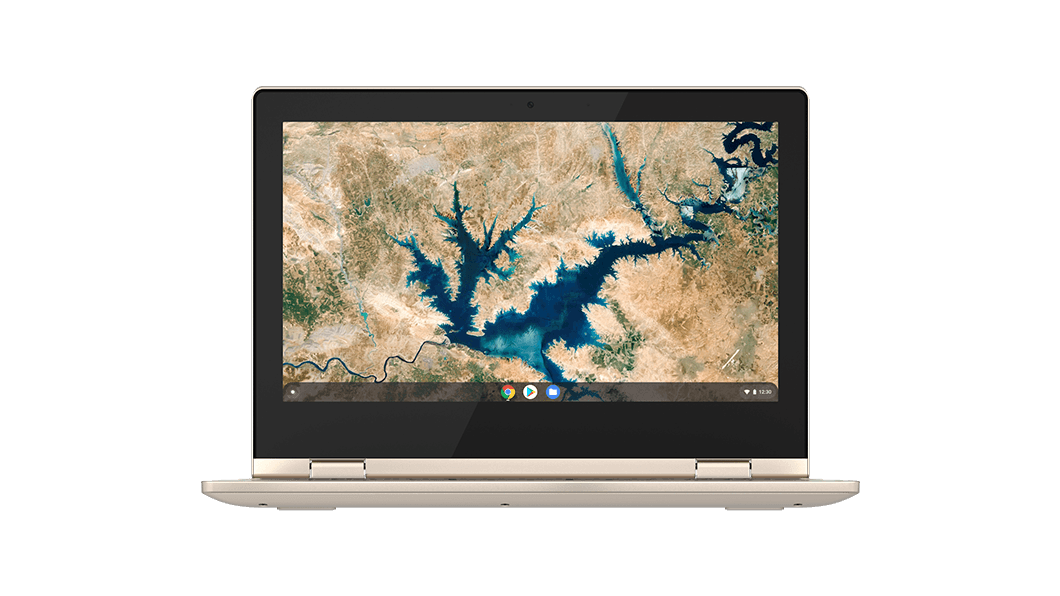
Someone on a limited budget who wants a compact, the lightweight tablet will find the Lenovo Flex 3 to be an excellent choice. It's most helpful as a portable companion for travel or school since it can run for almost nine hours on a single charge and recharges fast thanks to its 45W power brick.
There are some other benefits as well. One of the best keyboards we've ever used on a Chromebook, let alone on a Chromebook in the $350 price bracket, can be found on this model. In addition, it offers a great connection, with four contemporary USB ports as well as a microSD card reader.
Having said that, this isn't the gadget for anything other than the most basic of activities. Because of the small screen (11 inches), there isn't much space for multitasking, and the Intel Celeron CPU isn't intended to run a large number of demanding applications or a large number of Chrome tabs.
Post a Comment