What does the abbreviation OLED stand for? In a world of tech-related acronyms, many of us have heard this word before, whether in relation to televisions, computers, or the new Nintendo Switch OLED. However, it is not always simple to explain in a sea of acronyms.
To put it simply, OLED is a kind of sophisticated panel technology that is becoming more popular. Consider taking a tour of an electronics store the next time you go shopping — whether in person or online. OLED televisions account for the overwhelming majority of new, high-end televisions available for purchase. (It can also be found on a large number of high-end smartphones and iPhones.)
OLED is an abbreviation for Organic Light Emitting Diode, which is a kind of light-emitting device. This term refers to the kind of panel that is utilized in an OLED television to show everything you see, including colors, light, and pictures.
It is this that distinguishes OLED from other types of television technology, such as CRT (cathode ray tube), LED (light-emitting diode), LCD (liquid crystal display), or QLED (quick response display) (quantum dot). OLED displays make use of an organic material that is usually more expensive to manufacture than other types of displays and has a shorter shelf life, but the benefits they may provide are significant.
Comparing OLED TVs to rival display types, you'll notice a significant improvement in picture quality (think deeper blacks and brighter whites), a reduction in power usage, and much quicker reaction times - the latter of which is an excellent feature for any gaming television.
If you want to be successful in technology, don't feel like you have to know what every technical word means - that would be tiresome. However, whether you are considering purchasing one of the finest televisions or a screen-based device, we believe it is worthwhile to understand more about OLED. These days, the only technology that can compete with this kind of technology is Samsung's QLED panels, with Micro LED still having a long way to go before it catches up.
If you're in the market for a new TV or display that incorporates OLED technology, the most important issue to address is whether or not you should trust the hype around the technology. Everything you need to know will be explained in detail in our guide below.
FAQ:
- Is OLED a superior technology to LED? They're not the same. Though the low brightness of OLED displays may be a turnoff for some people, the technology shines in certain aspects, such as contrast and color accuracy, as well as black levels.
- Is OLED a greater resolution than 4K? Despite the fact that OLED TVs offer a clear 4K resolution, the majority of 4K TVs do not have OLED screens. You may pick and select anything you want!
- Is OLED more beneficial to my eyes? It is estimated that OLED screens produce about half the amount of blue light emitted by comparable LCD sets, reducing the risk of eye injury and the likelihood of the evening's programming keeping you awake at night. Those advantages should be extended to OLED smartphones as well.
- What is the source of OLED's high cost? They're costly and difficult to manufacture, with many models breaking while still on the production line, which adds to their difficulty. (Of course, only the functioning ones make it to the retail level.)
- What is the expected lifetime of an OLED television? Any OLED television should provide you with years of enjoyment. When the Korea Times published a study in 2016, it said that LG OLED televisions had a lifetime of more than 100,000 hours (11 years of constant use).
- Is it necessary to be concerned about OLED burn-in? Most likely not. Image retention is not a common issue, and the vast majority of people are unlikely to be impacted - but we have additional information on this below.
 |
| Image Credit: Sony |
What Exactly Is OLED?
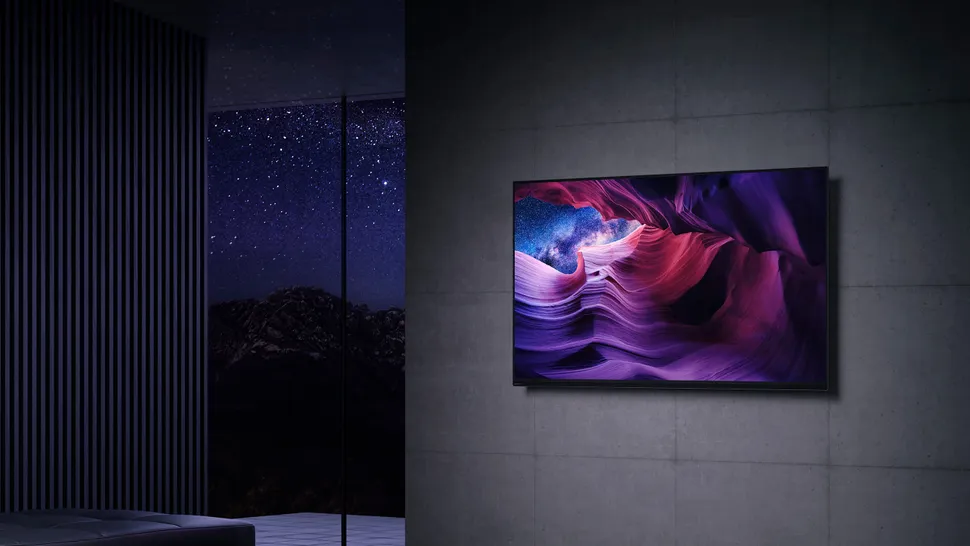
OLED is an abbreviation for Organic Light-Emitting Diode, with the term "organic" referring to the carbon film that is placed within the panel before the glass screen to emit light.
When an electric current is sent through an OLED panel, the screen emits its own light, while the cells in an LCD-LED display need an external light source, such as a large backlight, to be sufficiently bright.
This backlight was the distinguishing feature between LCD panels and their LED counterparts. Traditional liquid crystal displays (LCDs) include a backlight (also known as a cold-cathode fluorescent light, or CCFL) that is consistent over the whole back of the screen.
This implies that regardless of whether the picture is black or white, it is illuminated by the same amount of light throughout the whole screen. As a result, we see fewer "hotspots," or regions of very intense light, since the light source that is lighting them is more evenly distributed.
In 2013, engineers at firms like Samsung and Sony developed an array of LEDs as a backlight, which allowed them to switch off the LEDs behind any area of the screen that wasn't black in order to make it seem blacker. This was the beginning of a trend that has continued ever since.
Although this is a more effective option than a CCFL backlight, it is not without its drawbacks. Because the illumination is provided by a light behind the LCD layer rather than by the LCD layer itself, the lighting is not perfectly in sync with the pixel in front of it, as is the case with most LCDs. A phenomenon is known as "blooming" occurs as a consequence of this phenomenon, in which LED light from bright parts of the picture spills over into areas of complete darkness.
This is what distinguishes OLED screens from LCD and LED displays. An OLED TV display is unique in that the pixels themselves are responsible for generating the light, which means that when the pixels need to go dark, they can do it without depending on a backlight to do so on their behalf.
How Much It Cost?
OLED televisions are becoming more inexpensive, but they are still a long way from being what we would consider economical. TVs produced by Panasonic and Sony are often more costly than those created by LG. New LG TVs start at $1,399 / £1,099 / AU$2,130 (in the case of the LG A1 OLED, for example), while those made by Panasonic and Sony are typically more expensive yet.
Because of the paucity of OLED televisions available on the market, the limited number of competitors in the industry are more or less free to charge whatever they want for their products. Although more competition is assisting in this shift, the launch of a new 48-inch OLED size, as well as the scaling up of manufacturing, are also assisting in lowering the cost of affordable OLED TVs.
It is still possible to find models that are a year or more old that are selling for three-figure amounts, with the Vizio H1 OLED selling for $899 in flash sales and the Philips 754 selling for £999 in the UK — and we are certainly at a turning point in the market. The introduction of 42-inch OLEDs in the near future might also be beneficial in this regard.
Maintaining an eye out for end-of-year discounts is certainly worthwhile. OLED TVs are often reduced significantly during Black Friday and Cyber Monday sales – and considering their high beginning prices, you can typically save hundreds of dollars if you shop at the appropriate time of year. Cheaper OLEDs, on the other hand, may still see significant price reductions, bringing them closer to the grasp of mid-range consumers.
It is also expected that the price of most OLED display devices other than televisions would increase. The new Nintendo Switch OLED costs $349.99 / £309.99 / AU$539, which is a significant increase over the previous mainstream LCD model's pricing of $299.99 / £279.99 / AU$449, which was released in March.


Post a Comment